Email Address
info@anantengineering.com
Phone Number
+91-70214-18176
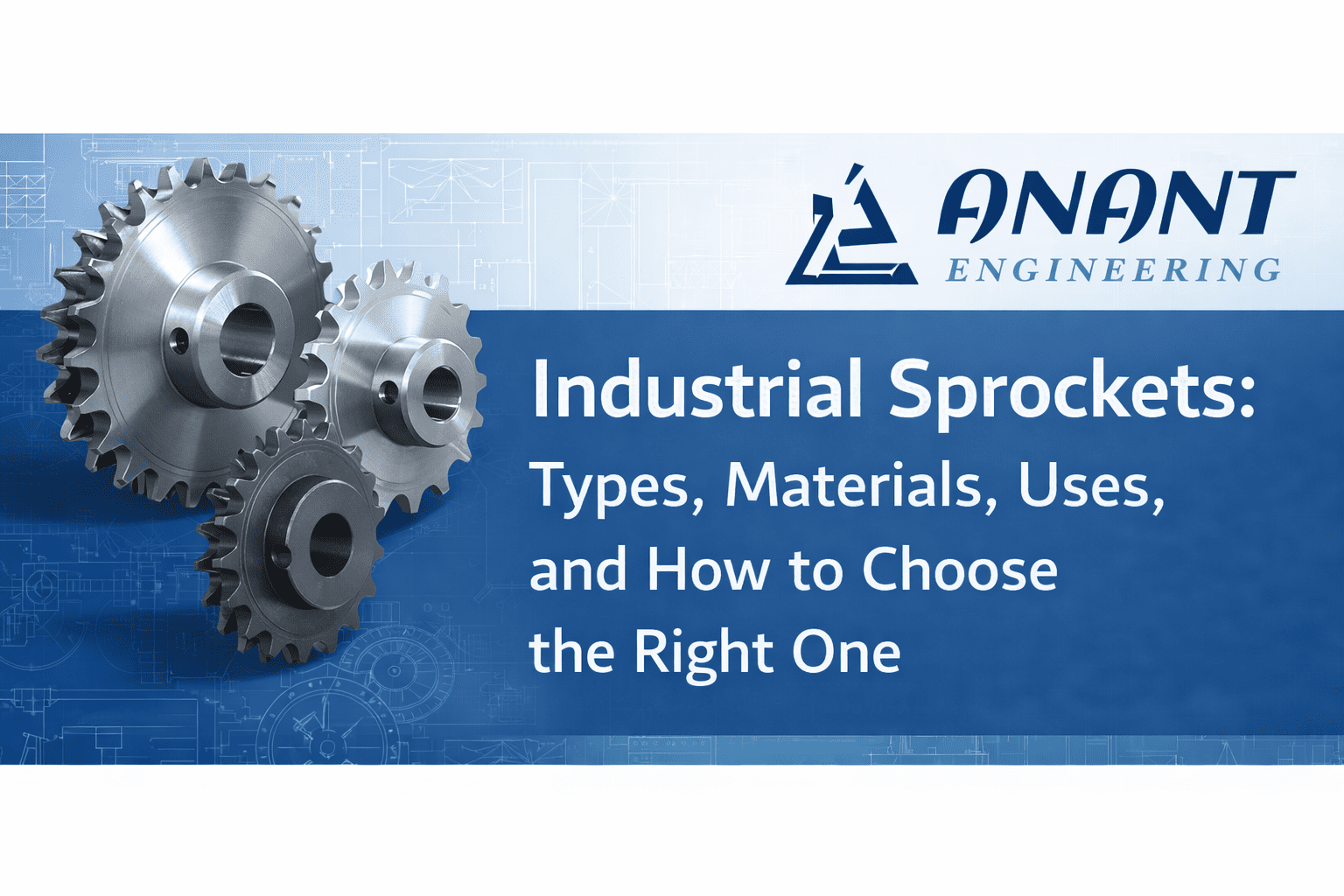
Industrial sprockets are a critical component in power transmission systems used across manufacturing, material handling, and heavy machinery industries. From conveyor lines to large industrial drives, sprockets ensure smooth motion transfer, reliable performance, and efficient load handling. Understanding how chain sprockets work, the different sprocket types available, and how to select the right industrial chain sprocket can help improve machine efficiency and reduce downtime.
This article explains the basics of industrial sprockets, their working principle, and the most common sprocket types used in industrial applications.
Industrial sprockets are toothed mechanical components designed to transmit power and motion using a chain. Unlike gears, sprockets do not mesh directly with each other; instead, they engage with roller chains to transfer rotational force between shafts. This makes them highly suitable for applications where consistent speed, high load capacity, and long-distance power transmission are required.
The primary role of industrial sprockets is power transmission and motion control. When paired with chains, they allow machinery to move loads efficiently with minimal slippage. This makes them a preferred choice in industrial environments such as factories, warehouses, and processing plants.
A key difference between sprockets and gears is their mode of operation. Gears transmit power through direct tooth contact, while sprockets rely on chains. This chain-based system offers better flexibility, easier maintenance, and the ability to handle misalignment over longer center distances.
Industrial chain sprockets are especially important in heavy machinery and conveyor systems, where durability and load-handling capability are critical. They are widely used in material handling, mining equipment, agricultural machinery, and production lines.
In this article, we will cover how chain sprockets work, common sprocket types, materials used in manufacturing, typical industrial uses, and a practical sprocket selection guide.
The working principle of chain sprockets is simple yet highly effective. A sprocket rotates and engages with a roller chain, which then transfers motion and power to another sprocket mounted on a separate shaft. This system allows mechanical energy to move efficiently across distances without slipping.
This positive engagement ensures accurate speed ratios and consistent power transmission.
Several parameters influence how well a chain sprocket system performs:
Chain and sprocket systems are known for their high efficiency and excellent load-handling capacity, making them ideal for industrial applications where heavy loads are involved.
Despite their reliability, chain sprockets can face issues such as:
Regular inspection, correct alignment, and proper lubrication help maintain efficiency and extend the lifespan of industrial chain sprockets.
There are several sprocket types used across industries, each designed for specific operating conditions and load requirements.
Conveyor sprockets and heavy-duty sprockets are especially common in manufacturing plants, warehouses, and mining operations due to their strength and durability.
Some industrial applications require custom sprockets based on shaft size, load capacity, speed, or environmental conditions. These are often used in specialized machinery or automated systems.
Choosing the correct industrial chain sprocket depends on:
Selecting the right sprocket type improves efficiency, reduces maintenance, and ensures long-term operational reliability.
The performance and lifespan of industrial sprockets depend heavily on the sprocket materials used. Different materials are chosen based on load, speed, and working environment.
Material selection depends on:
In harsh environments such as food processing or chemical plants, stainless steel sprockets are preferred. For heavy-load and continuous-duty operations, heat-treated and hardened sprockets are used to improve wear resistance and strength.
High-quality materials reduce wear, improve reliability, and lower maintenance costs. Proper material selection ensures longer sprocket life, fewer breakdowns, and safer industrial operation.
Industrial sprockets are used in a wide range of industries due to their strength, reliability, and ability to operate continuously.
Conveyor sprockets are commonly used in:
They ensure smooth and controlled movement of materials.
Heavy-duty sprockets are essential in:
These sprockets are designed to handle high loads, shock, and harsh operating conditions.
Industrial sprockets are widely used in:
Sprockets are used in harvesters, conveyors, and processing equipment. Stainless steel sprockets are preferred in food processing for hygiene and corrosion resistance.
Industrial sprockets are critical in continuous-operation systems, where reliability, safety, and minimal downtime are essential.
Selecting the right sprocket is key to efficient and safe operation. This sprocket selection guide highlights the most important factors to consider.
Correct sprocket alignment reduces:
Regular inspection, lubrication, and timely replacement ensure long service life and reliable performance.
Industrial sprockets play a vital role in power transmission, material handling, and continuous industrial operations. Understanding sprocket types, sprocket materials, and application needs helps ensure reliable and efficient performance.
Choosing the right sprocket improves safety, reduces downtime, and extends equipment life. Whether selecting conveyor sprockets for material handling or heavy-duty sprockets for demanding environments, proper selection and maintenance are essential.
For best results, consider load, speed, environment, and alignment carefully. Consulting experienced suppliers or exploring proven industrial sprocket solutions can help you achieve long-term reliability and operational efficiency.












Anant Engineering is a leading manufacturer of high-quality industrial gears, couplings, and power transmission components. We provide precision-engineered solutions designed for maximum durability and performance across heavy industries.Our products are built to handle the most demanding industrial environments, ensuring your machinery operates with absolute accuracy and reliability. Whether you require standard gear units or custom-engineered components, we deliver the performance-based solutions your business needs to stay ahead. Partner with us today and take your industrial quality and profits to the next level!